Epistemic Status: just figuring this out myself. this is the writeup of a presentation/workshop I gave for friends. as the talk was in german, i will include german names for the knots.
1 How Knots work
Tying a knot means putting complications into a type of cordage, e.g. a rope. This increases friction as more surface of the rope makes contact with itself, resisting sliding. The more complex the knot, the more friction, the better it holds (usually). Knots also use the principle of jamming, where the geometry of the knot results in points where it phsically wedges against itself, making it difficult or impossible to slide.
A good knot balances friction and jamming to stay secure under load but can still be untied when needed. Too much jamming creates a knot that’s permanent. Too little friction, and the knot slips. Knots can fail through creep (gradual slippage under constant load), capsizing (flipping into a different, weaker configuration) or simply by coming undone, if tied incorrectly.
2 On terminology
Knots are regularities that are discovered, and so were discovered in multiple places by different people which gave them different names. Different languages use different names, but even in a specific language there are different names, depening on who uses them (e.g. sailor, arborist, scouts, etc).
There are some basic regularities that might be useful to know and remember, to be able to spot them.
| English | German | Explanation | Example |
|---|---|---|---|
| Turn | Auge | legs of a loop cross | 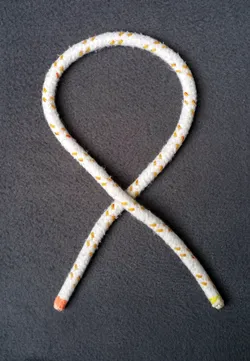 |
| Loop | Schlaufe | fixed turn, doesn’t slip or tighten | 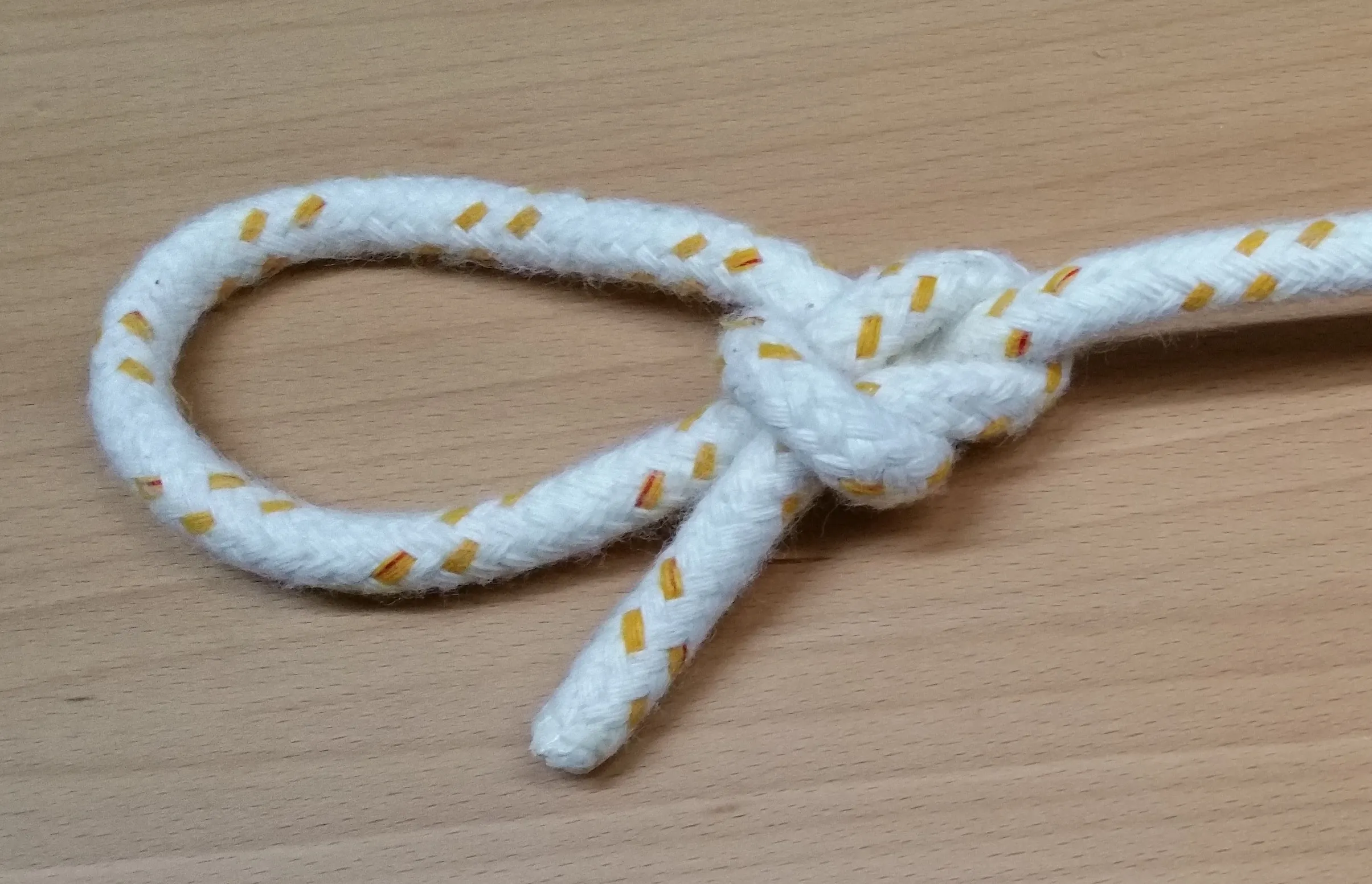 |
| Noose | Schlinge | tightens if you pull | 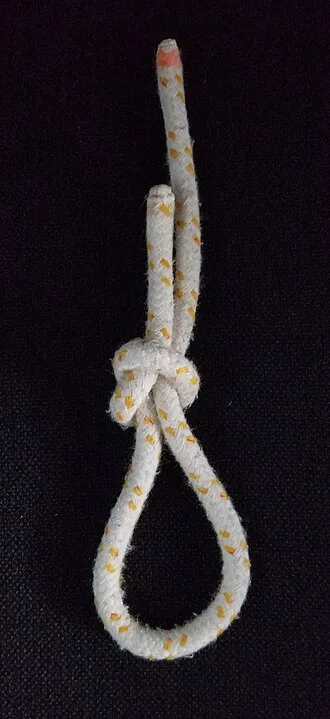 |
3 Some Famous Examples
There are a lot of knots and a lot of them are widely known and useful. The following are just a personal choice and preference. I would recommend getting a bit of rope and trying to knot along. Knotting them only once usually doesn’t mean you retain that skill indefinitely, so I can also recommend putting them in Anki to practice them in regular intervals.
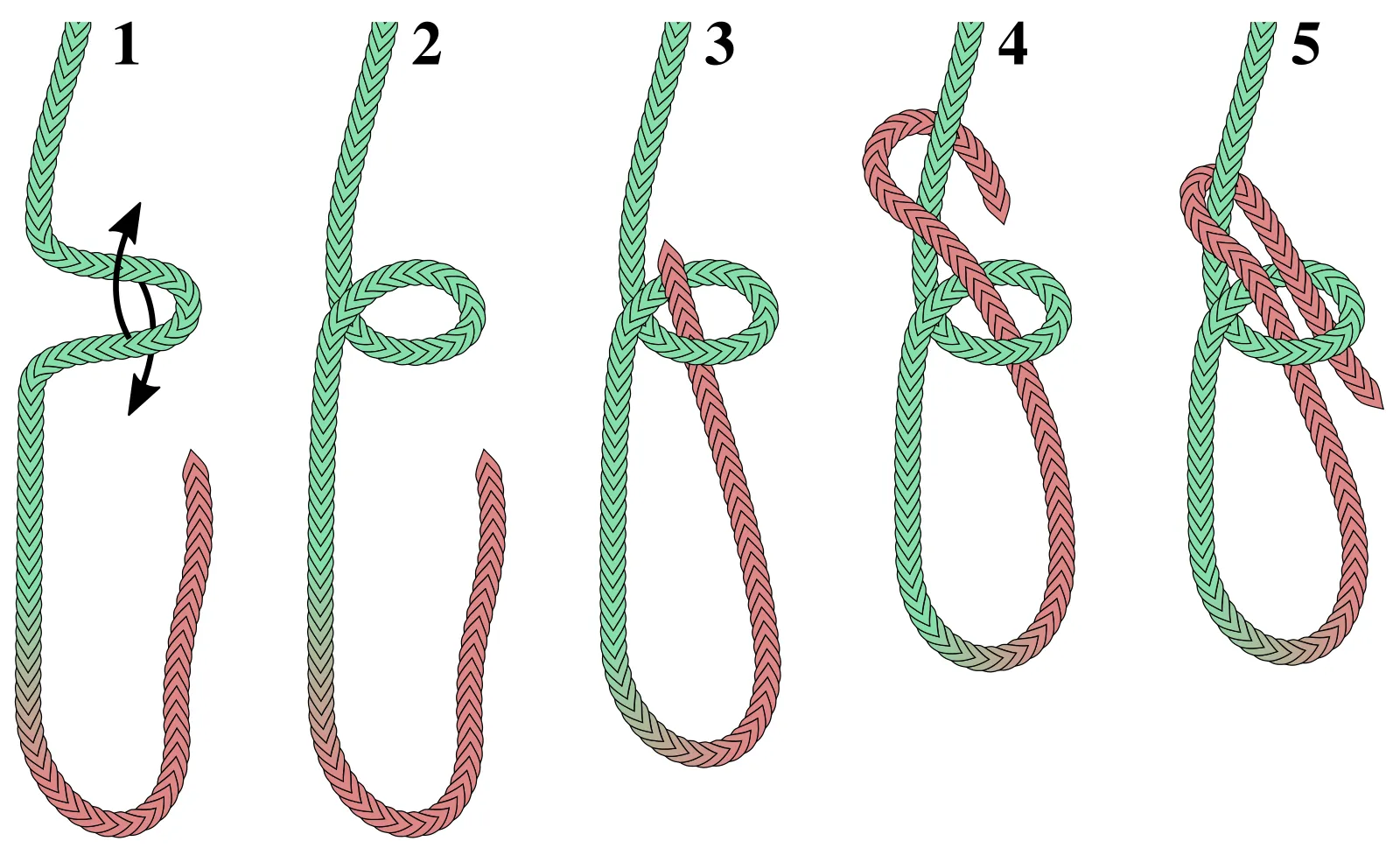
Bowline - Palstek - Rettungsschlinge - einfacher Ankerstich
This is a loop that is easy to tie which is secure under load and is easy to untie even after different load. Is used often, e.g. to tie a ship to a dock. Is not used in climbing anymore because it can become undone if there are forces in different directions at the loop.
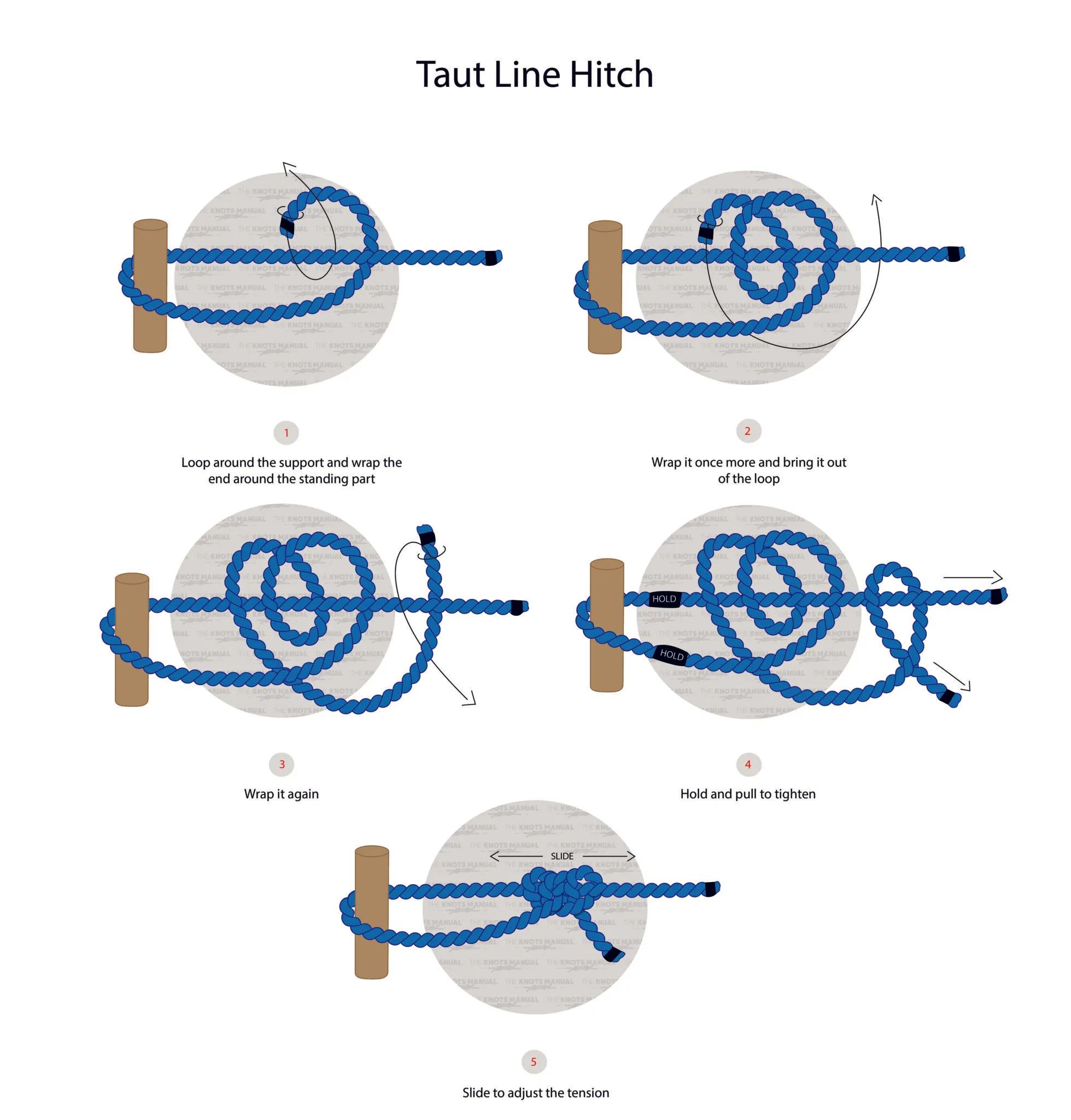
Taut Line Hitch
Similar to the Bowline, it is a loop. It has the addtional feature of being adjustable by putting pressure on the knot itself.
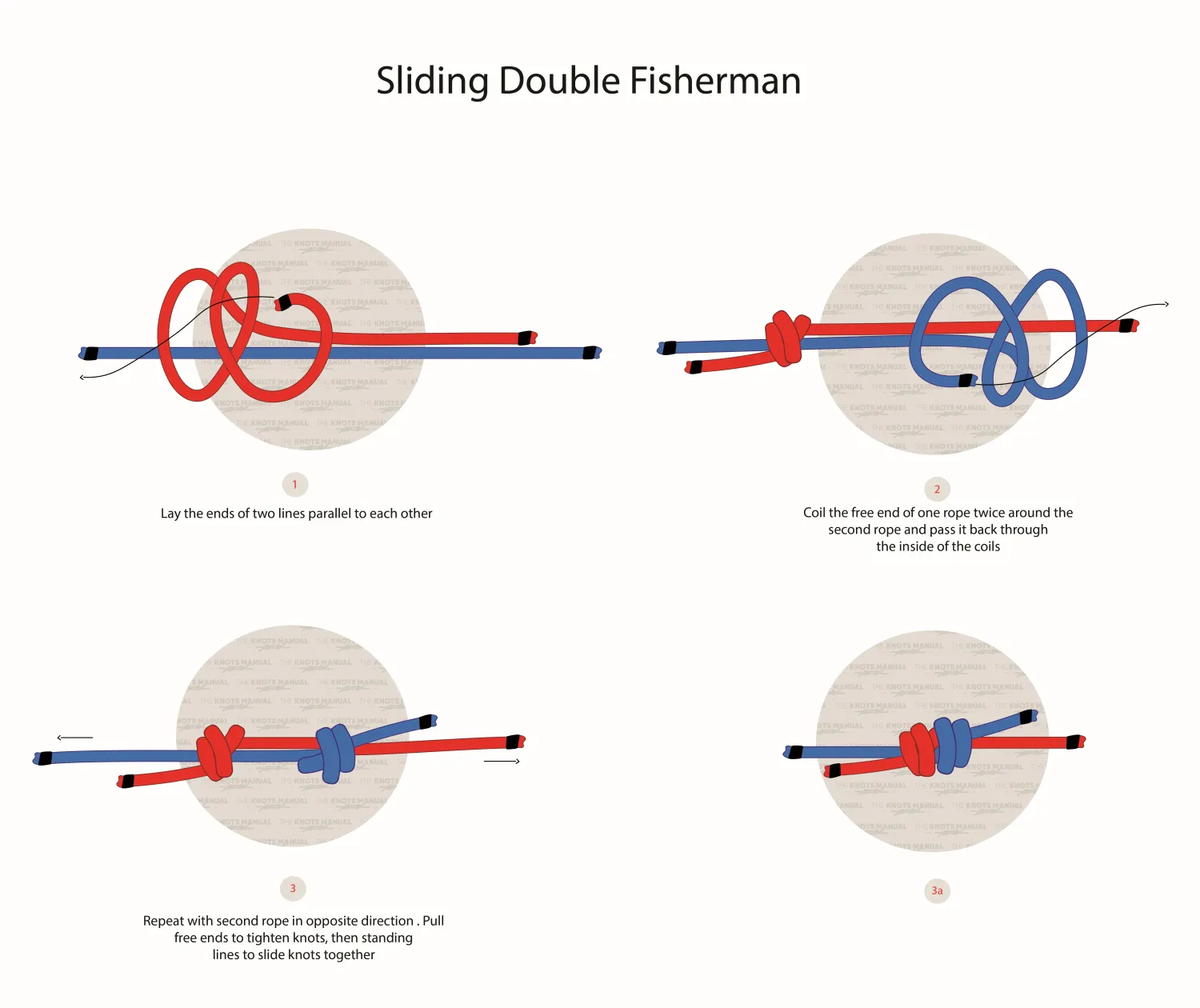
Double Fishermans knot
Use it to connect two ropes of same thickness together, or two ends of rope to create a sling.
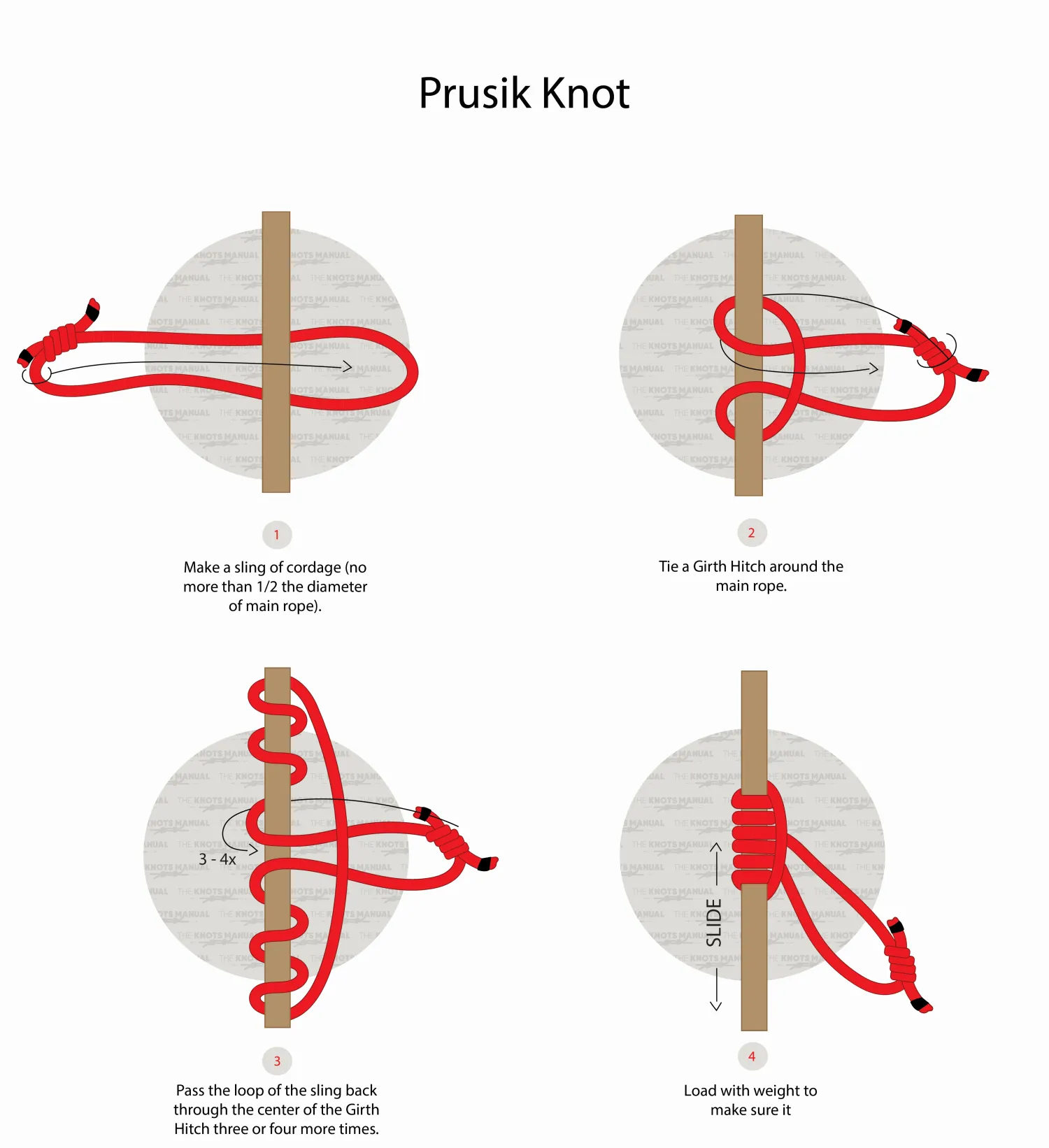
Prusik - mehrfacher Ankerstich
The Prusik knot is used to connect a thinner rope to a thicker rope or object. Tightens under load, without load you can slide it around. Use it to attach something that you want to be able to move. Or use it to climb a rope!
4 There really are a lot of knots
Ashley’s Book of Knots is one of the most important books on knots, basically the bible of knots. It lists 3,857 numbered entries. If you want to learn more about knots, I recommend getting some Parachord and trying some knots for yourself. There are a ton of resources on the web that explain all you would want to know. The ones that I used most include The Knots Manual, Animated Knots and The Bear Essentials and their Youtube Channel.